Category: how-to

  • DreamTrips AI Is Here: Inside the Launch of the World’s First AI-Powered Travel Club App

    DreamTrips AI Is Here: Inside the Launch of the World’s First AI-Powered Travel Club App

    In August 2026, a familiar name in travel returned with a new way to plan and experience trips. DreamTrips AI has launched, bringing the DreamTrips travel community together with an AI assistant, DreamTrips listings, trip inspiration and a booking engine in one app.

    For longtime members, it marks an exciting new chapter. For anyone discovering DreamTrips for the first time, it’s a chance to see how a travel club can bring people, places and planning tools together.

    The launch describes DreamTrips AI as the world’s first AI-powered travel club app. At its heart is an idea that feels both fresh and familiar: make it easier to imagine your next trip, shape a plan around what matters to you, and explore travel options in one place.

    The DreamTrips AI App had been created in house by DreamTrips and directly connects to the DreamTrips platform. The result is when the AI assistant creates a trip itinerary and suggests hotels, they will show at wholesale rate. All other apps like ChatGPT, Gemini and Claude will only return retail pricing.

    A travel community with a history of shared experiences
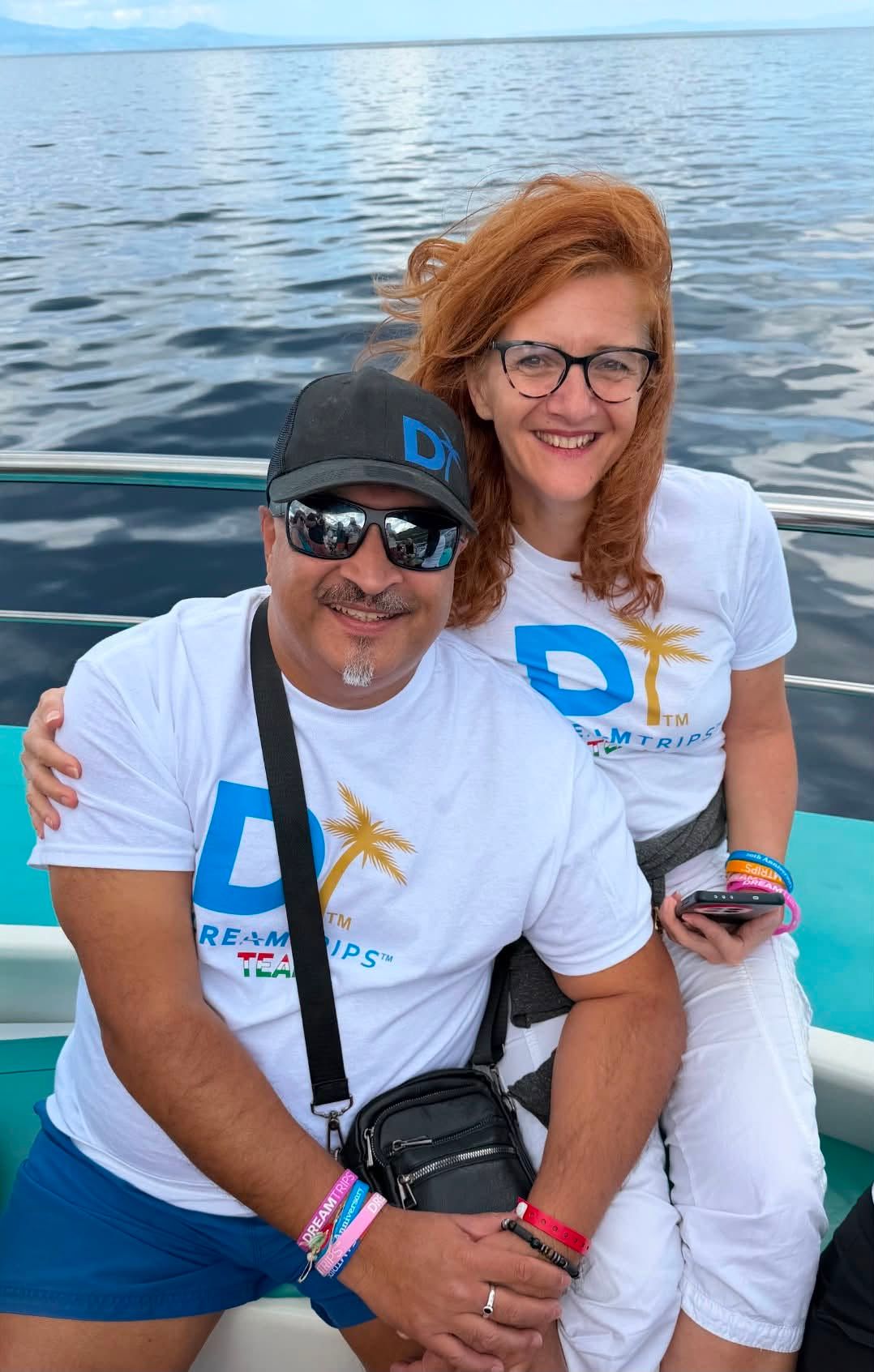
    A couple in DreamTrips shirts enjoying a boat outing together

    DreamTrips is more than an app name. It’s a travel club built around the experiences members share, from group getaways to special moments in destinations around the world.

    Over the years, more than five million people have become DreamTrips members, and around 30,000 trips have been taken. These are community milestones that reflect the scale of the DreamTrips story and the many journeys members have enjoyed together.

    And if you’ve ever spotted a bright blue banner saying “You Should Be Here!” in a travel photo, you may have seen part of that story. Members have carried the banners with them and photographed them in destinations around the world. The phrase is simple, but it captures a feeling many travelers know well: finding a place so special you wish someone you care about could be there too.

    Now, DreamTrips is back with a new app designed to bring that spirit into a more connected travel experience, making it easier for DreamTrips members old and new to plan, book and share their journeys.

    Big trips, shorter breaks and booking in one app

    DreamTrips members holding blue banners beside a resort pool

    One of the appealing things about DreamTrips AI is that it brings several parts of the travel experience together. In the app, you can explore DreamTrips, the larger curated trips; Dream Breaks, for shorter getaways; and a booking engine.
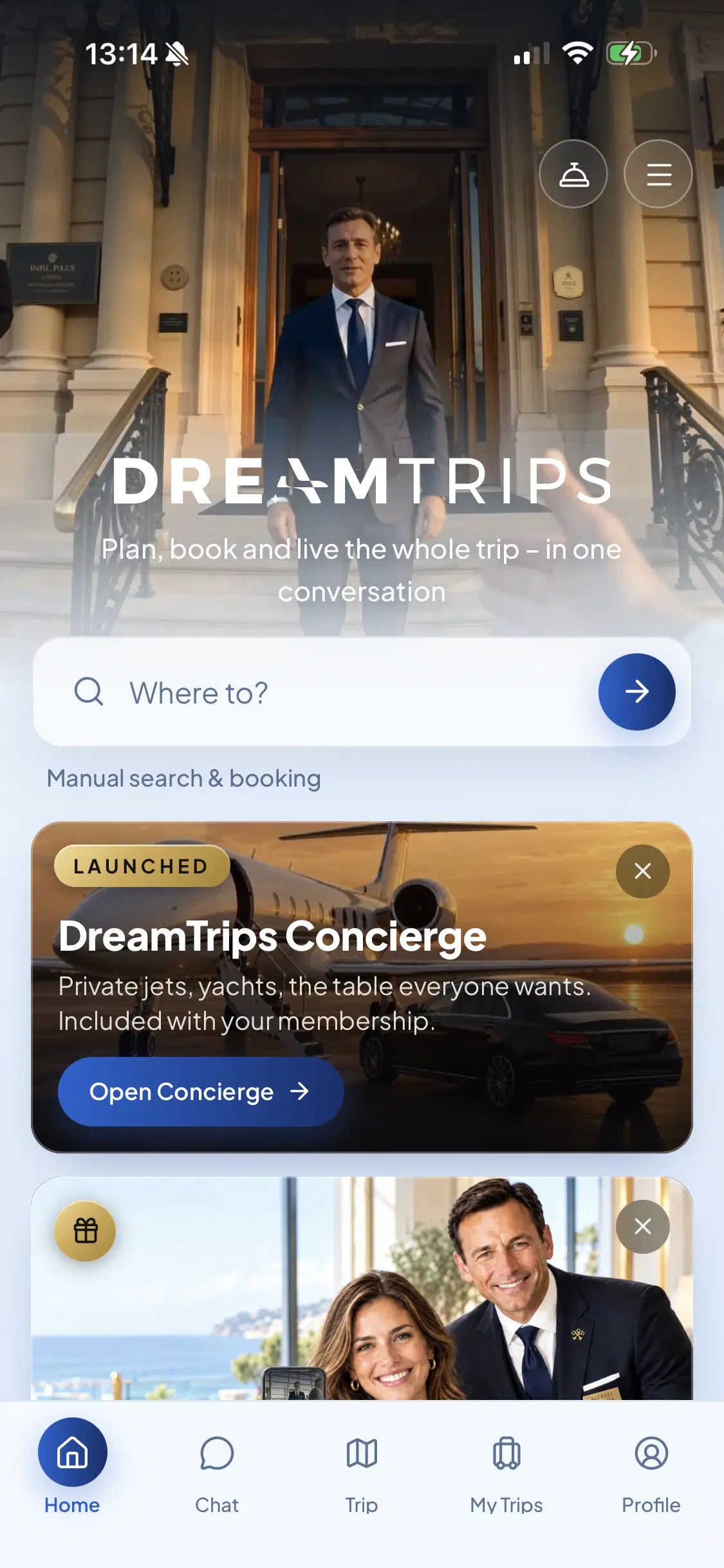
    DreamTrips AI app home screen showing the trip search, DreamTrips Concierge and booking options

    The home screen puts everything a few taps away: a simple "Where to?" search, the new DreamTrips Concierge for those special occasions, and manual search and booking if you'd rather look yourself. Scroll further and you'll find upcoming Dream Breaks with dates and prices, themed trips built around shared interests, and quick booking tiles for hotels, flights, attractions, landmarks, restaurants and events.
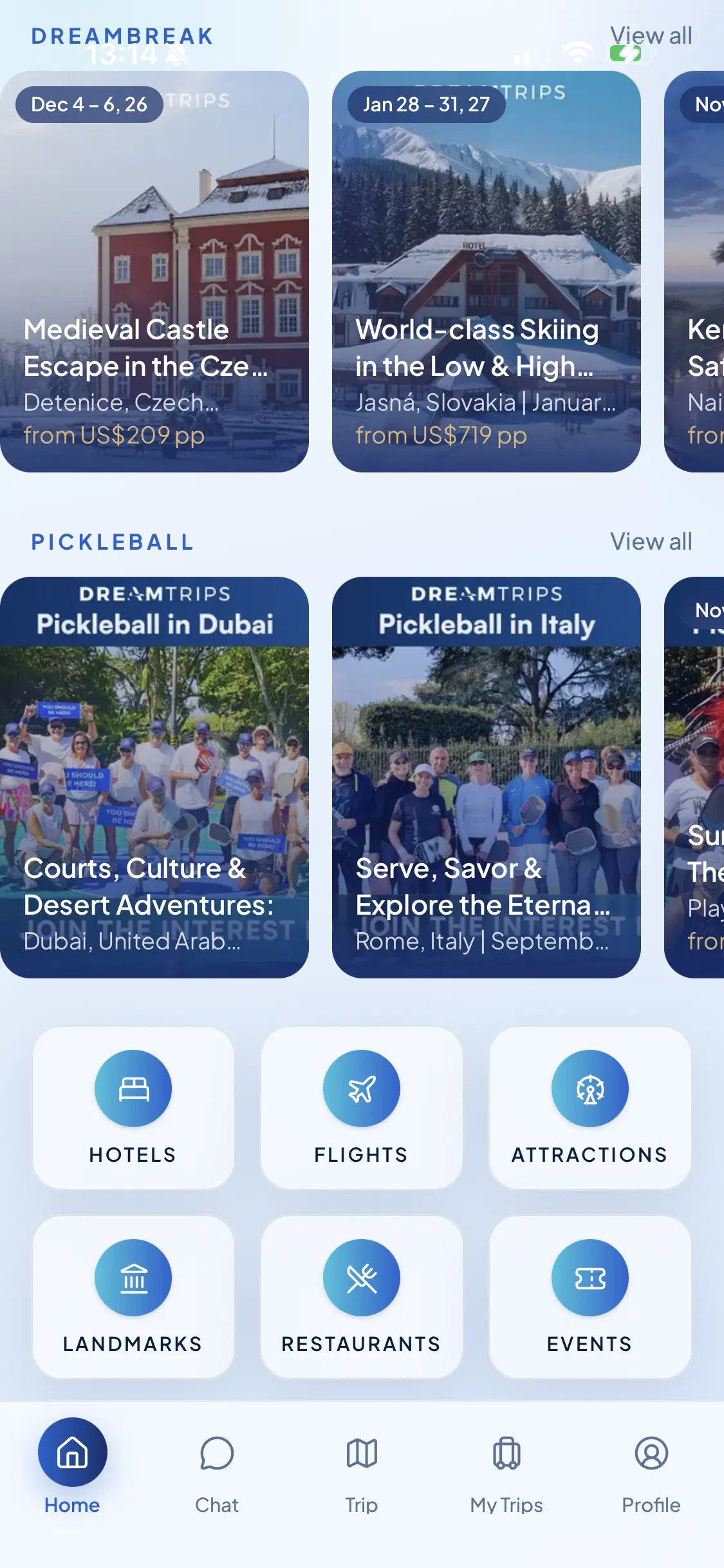
    DreamTrips AI app screen showing Dream Breaks with dates and prices, plus booking tiles for hotels, flights, attractions and restaurants

    Instead of switching between different places to look for trip ideas and travel options, you can explore these features in one app. That doesn’t mean every journey will look the same. It simply gives you a central place to start looking, whether you’re thinking about a bigger group trip or a quick break.

    For travelers exploring a wholesale travel club, having travel experiences and booking tools together can make the process feel more joined up. And for those hoping to enjoy luxury travel on a budget, membership options and prices are worth reviewing carefully to see what fits your travel plans and budget.

    The blue banner is part of the story

    DreamTrips members gathered at a harbour with a blue DreamTrips banner

    The “You Should Be Here!” banner has become a recognizable part of DreamTrips travel. Members carry it to destinations and take photos with it, turning a bright blue sign into a shared invitation: come see this place for yourself.

    Many celebrities have had their picture taken with the #YouShouldBeHere sign over the years, and some have even become DreamTrips members themselves. From film stars to musicians and sports legends, the little blue banner keeps showing up in the most unexpected places.

    Celebrity photos with the blue You Should Be Here banner, including a famous Jedi Master and actors holding the sign

    More celebrities and members holding the You Should Be Here banner at events and on trips

    Members and celebrities, including a well-known comedy writer and actor, with the DreamTrips You Should Be Here banner

    Celebrities posing with members behind the You Should Be Here banner around the world

    And the reach is bigger than any one photo. Over 5 million people have become DreamTrips members, and tens of millions of people have seen the little blue banner from DreamTrips all over the world. Behind each image is a real trip and a real group of people making memories together. That’s what gives the tradition its warmth. It isn’t just about the destination; it’s about the feeling of sharing the experience.

    Most importantly, DreamTrips are back, with people doing DreamTrips again. The new app gives this community a fresh digital home, while keeping the connection to the journeys that came before it.

    An August launch and a new chapter for DreamTrips

    Shush Arya and a colleague standing in front of a DreamTrips AI launch backdrop

    The August 2026 launch brought DreamTrips’ travel-club community into a new chapter shaped by technology. AI is becoming part of how people research and organize trips, but the most useful tools are the ones that make planning simpler without taking away the human choices that make a trip yours.

    That’s the promise behind DreamTrips AI: bring travel discovery, planning support and booking options closer together. It’s a notable development in the AI in travel industry, where trip planning tools are moving beyond general suggestions toward more tailored help.

    There’s also a side to DreamTrips that goes beyond travel itself. Alongside the member perks, DreamTrips offers a travel business opportunity: members who love the club can share it with others and, if they choose, build a small business around it. For people who already spend their free time recommending hotels and restaurants to friends, that’s a natural fit. As with any business opportunity, results depend on individual effort, and it’s worth reviewing the terms carefully before deciding.

    DreamTrips AI launch event on stage

    The launch celebrates both the app and the return of the DreamTrips community. For longtime members, it’s a chance to reconnect with a familiar travel tradition in a new format. For new travelers, it’s an opportunity to explore what the club offers and decide whether it matches the way they want to travel.

    Meet Alfred AI, the DreamTrips travel club's trip-planning assistant

    DreamTrips AI app promo graphic featuring a phone, the Alfred AI assistant and multilingual travel-planning features

    Inside the DreamTrips AI app is Alfred AI, the travel assistant designed to help you shape your ideas into a trip plan. Tell Alfred what kind of experience you have in mind, and it can help create a full itinerary within minutes.

    That can be a useful starting point when you know you want to get away but haven’t worked out the details yet. You might have a destination, a few interests or a particular pace in mind. Alfred can help turn those pieces into a more complete itinerary, giving you something to review and refine.

    The launch material also describes DreamTrips AI as a multilingual AI voice trip planner and concierge, with support for English, Spanish, French, German, Italian, Portuguese, Japanese, Chinese and more. This can help make the planning experience more accessible for people in different parts of the world.

    AI can make planning faster, but you remain in charge. Check important details such as availability, opening times, prices and booking terms before making decisions. If you’d like a few practical pointers on using AI to organize a trip, our guide to AI tools for travel planning is a helpful place to start.

    A return rooted in connection

    DreamTrips AI brings together familiar parts of the DreamTrips experience and new planning technology. The blue banners still point to shared journeys. The app adds a place to explore DreamTrips, Dream Breaks and booking options, with Alfred AI ready to help turn travel inspiration into a draft itinerary.

    That combination is what makes this launch feel meaningful: a community with a history of travelling together, now stepping into a more connected way to plan.

    DreamTrips members taking a selfie above a city skyline while holding a blue “You Should Be Here!” banner

    Maybe you’re planning a family holiday, a couple’s escape or a group adventure with friends. Maybe you’re simply curious about DreamTrips as a travel club, or exploring it as a travel business opportunity. Either way, you can take a look and decide for yourself whether it belongs in your travel plans.

    Would you like to explore DreamTrips AI? You can request a free 24-hour trial of the app by sending a WhatsApp message with your email address. Use the link below, add your email, and ask any questions you have. There’s no pressure to decide before you’ve had a chance to explore.

    Request your free 24-hour DreamTrips AI app trial on WhatsApp

  • How to Get Paid to Travel: Real Ways to Fund Your Travels in 2026

    How to Get Paid to Travel: Real Ways to Fund Your Travels in 2026

    Getting paid to travel sounds like a dream: new places, meaningful experiences, and more freedom over where you spend your time. But the reality is usually less “free holiday” and more “work that makes travel possible.”

    There are several ways to do it. Some offer the predictability of a job. Others take time to grow and feel more like running a business. The right choice depends on your skills, finances, and how much uncertainty you can manage.

    Here’s an honest look at the main routes, including how an online travel business can fit in.

    1. Find remote work that gives you travel flexibility

    Remote work is often the clearest way to earn while you travel because you’re paid for your work, not for being on holiday. You might find work-from-home jobs in travel with a hotel group, tour company, travel platform, or airline, or work remotely in fields such as marketing, design, customer support, sales, or software.

    But “remote” does not always mean “work from anywhere.” Some employers restrict overseas work because of tax, privacy, insurance, or employment rules. Always get permission before working from another country, and check whether your visa allows it. A tourist visa may not give you permission to work remotely.

    What it takes: A skill employers or clients need, a reliable internet connection, and a role that genuinely permits the arrangement. It may take weeks or months to find a suitable job, and you’ll still need to balance work hours with exploring.

    A remote professional working from a boutique hotel balcony overlooking the sea

    Best for: People who value regular income and already have, or are ready to develop, a marketable skill. You may not be paid specifically to travel, but steady work can help fund your trips.

    2. Create travel content and build an audience

    Travel creators can earn through brand partnerships, affiliate links, advertising, freelance photography or video, and paid content made for businesses. Some create videos or guides for a specific audience, such as families, budget travellers, or people exploring one region.

    The honest part? It can take a while to earn consistently. You need to make useful content, find an audience, pitch potential clients, and learn which formats work. A large following is not a guarantee of income, and you can start earning from freelance content or user-generated videos before building a big audience.

    If you promote a product, experience, or membership for a commission, make that relationship clear. The U.S. Federal Trade Commission’s guidance for influencers explains that financial relationships and free or discounted products may need to be disclosed.

    A travel creator filming a Mediterranean harbor at golden hour

    Best for: People who enjoy storytelling, filming, writing, and connecting with an audience, and who are comfortable with income that may be unpredictable at first.

    3. Teach or take seasonal work abroad

    Teaching, hospitality, ski resorts, summer camps, farms, and other seasonal roles can give you the chance to spend an extended period in a destination while earning. These jobs are still jobs: you’ll have hours, responsibilities, and often a fixed location.

    Requirements vary. Teaching may require a degree, a teaching qualification, or a recognized TEFL certificate. Seasonal employers may ask for relevant experience, background checks, or proof that you’re eligible to work. In either case, check the exact visa and permit requirements before accepting a role. The Canadian government’s International Experience Canada program, for example, sets eligibility rules for young adults from participating countries.

    Hiring often follows the season, so planning ahead matters. You may need to budget for travel, insurance, documents, and the time between contracts.

    Seasonal hospitality workers outside a warmly lit alpine lodge at dusk

    Best for: People who want an immersive stay, enjoy structured work, and meet the role’s eligibility and visa requirements.

    4. Build an online travel business by sharing a membership

    This is the route we specialise in at Travel AI Money. It combines access to a travel membership with the option to earn referral commissions by sharing it with others.

    Members can access wholesale rates on hotels, resorts, cruises, and curated group trips. If you choose to share the membership, you may earn a commission when someone joins through your referral, subject to the current program terms. It’s an online travel business, not a guaranteed income and not a paid holiday. Commissions depend on genuine interest, customer decisions, and consistent effort.

    Our training and mentorship help you learn how to explain the membership clearly and build your business. AI tools can support content creation, prospecting, and follow-ups from your phone. They can make some tasks easier, but they don’t replace your judgment, relationships, or the work of showing up consistently.

    You can read more about how to start a travel business from home, whether you can make money selling travel, and how wholesale hotel rates work.

    Best for: People who enjoy sharing useful travel options, learning online marketing, and building relationships over time. It may suit you if you want a flexible, home-based travel business alongside other work, but it’s not a substitute for a guaranteed salary.

    What does it cost, and what does a realistic start look like?

    Costs depend on the path you choose. A remote job may require training or equipment. Content creation can involve a phone, editing tools, and travel expenses. Teaching or seasonal work may mean paying for applications, travel, insurance, or qualifications.

    For a membership-sharing business, review the current membership and business costs before deciding. Ask about any joining or recurring fees, what the membership includes, how commissions are earned and paid, and what cancellation or refund terms apply. Compare the travel benefits with alternatives you would realistically use. You can learn more about travel club membership considerations.

    A sensible starting plan is simple:

    1. Choose one main route. Decide whether you’re looking first for employment, seasonal work, content income, or a business.
    2. Check the practical details. Confirm eligibility, costs, work permissions, and any employer or program terms.
    3. Give it time. Spend the first few weeks learning, applying, publishing, or talking to potential customers. Early progress may be uneven.
    4. Track your money. Keep records of expenses and income. Tax obligations depend on your location and circumstances; the IRS guide for U.S. citizens and resident aliens abroad is one example of why it’s important to check rules that apply to you.
    5. Keep a backup plan. Savings, insurance, and a way home can make a big difference if work or travel plans change.

    Common mistakes to avoid

    • Assuming remote work is automatically allowed abroad. Check with your employer and the destination’s immigration rules first.
    • Expecting fast creator income. Building trust and repeatable revenue usually takes time.
    • Paying before you understand the terms. Read membership, commission, refund, and cancellation details before joining any program.
    • Treating potential earnings as guaranteed. Referral commissions depend on activity and results; they are not automatic.
    • Overlooking tax and travel costs. A trip may involve insurance, transport, equipment, and tax obligations, not just accommodation.

    Which path feels right for you?

    If you want the most predictable pay, start with remote employment or authorized seasonal work. If you love making videos or writing, content creation may be worth building gradually. If you’re interested in helping people discover travel memberships and are comfortable learning how to promote them, a travel business opportunity may be another option.

    You don’t have to figure out everything today. Start by asking what kind of work fits your life, and what level of flexibility you’re actually looking for.

    If you’d like to learn more about wholesale travel, travel rewards, and our AI-powered online travel business, message us on WhatsApp. We’re happy to answer questions so you can explore the details and decide whether it feels right for you.

  • Using AI Tools for Travel Planning: 2026 How-To Guide

    Using AI Tools for Travel Planning: 2026 How-To Guide

    Table of Contents

    Last Updated: October 16, 2026

    How AI Travel Planning Works and What It Can Do

    Using AI tools for travel planning is the practice of letting software build your itinerary, compare routes, and track costs from a short written brief. The catch: AI drafts, humans decide.

    Here is the short version. An AI trip planner reads your brief, pulls from its training data, and returns a day-by-day plan. It does not know if a restaurant closed last month or if a train line is under repair.

    What AI Tools Handle Well vs. What Needs a Human Check

    AI handles the heavy lifting on structure and speed. It struggles with anything that changes daily.

    AI does well:

    • Drafting a day-by-day itinerary from your dates and interests
    • Suggesting neighborhoods, attractions, and local food spots
    • Estimating rough budgets and daily spend
    • Building a travel route between cities and stops

    Needs a human check:

    • Opening hours, closures, and holiday schedules
    • Visa rules, entry requirements, and health advice
    • Real-time prices for flights and hotels
    • Safety conditions and weather changes
    • Accessibility needs for varied travelers
    Pro Tip
    Ask the AI to flag its own weak spots. Add “list anything you are unsure about” to your prompt. You get a built-in to-do list for verification.

    Choosing an AI Trip Planner That Fits Your Travel Style

    The right AI trip planner matches how you actually travel, not how you wish you traveled. A solo backpacker and a family of five need very different tools. But most “best AI trip planner” lists rank tools by affiliate payout, not by how they perform on a real trip. Here is a method you can run yourself in an afternoon.

    Start With the Questions That Actually Filter Tools

    • Do you want a full itinerary or just destination ideas?
    • Do you need budget management and expense tracking built in?
    • Will you book inside the tool or elsewhere?
    • Does it support your travel dates and trip duration easily?
    • Is there a free plan to test before you pay?

    Those questions narrow the field. They do not tell you which tool is accurate. For that, you need a test.

    A Real-World Testing Method You Can Run in One Afternoon

    Pick one trip brief, the same brief, and paste it into every tool you are considering. A brief that exposes weaknesses looks like this:

    “Plan a 6-day trip to Lisbon from March 3 to March 8. Budget: $1,400 total, excluding flights. Interests: food markets, tilework, coastal day trips, one live-music night. Pace: moderate, one rest afternoon. Dietary: one vegetarian traveler. List anything you are unsure about at the end.”

    Then score each tool on five criteria, 1 to 5:

    Criterion What You Are Actually Measuring
    Accuracy Did it invent restaurants, hours, or transit lines? Spot-check three items per tool.
    Usefulness Could you hand the output to a friend and have them follow it?
    Personalization Did it respect your pace, budget, and dietary note, or ignore them?
    Time saved Minutes from pasting the brief to a plan you would actually use.
    Iteration How well did it handle “make day 3 lighter” and “cut cost by 20%”?

    A common pattern: tools that look polished on their marketing page score 2 or 3 on accuracy because they hallucinate specific venue names. Tools that score high on accuracy often score lower on personalization because they play it safe. You are looking for the tool whose weaknesses you can live with.

    Match the Tool to the Traveler

    Traveler Type What Matters Most What to Skip
    Solo backpacker Free plan, route planning, hostel-friendly output Full booking suites
    Family group Budget tracking, shared plans, kid-friendly pacing Solo-focused apps
    Points enthusiast Reward tracking, flexible dates, award-availability prompts Rigid package deals
    Business traveler Fast edits, calendar sync, airport-to-hotel routing Deep sightseeing tools
    Accessibility-focused Step-free routing, verified access notes, rest-stop planning Tools that only output attraction lists

    Most tools offer a free plan or trial. Test one trip before committing. If you also want wholesale rates and a way to earn from travel, Travel AI Money bundles access to non-public pricing with AI tools and mentorship in one app.

    Pro Tip
    Run the same brief through two tools back to back. The differences in accuracy and personalization show up faster in a side-by-side than in any review roundup.

    ChatGPT Travel Planning Prompts You Can Copy and Reuse

    ChatGPT travel planning prompts work best when they carry four things: dates, duration, budget, and interests. Vague prompts get vague plans.

    A traveler sitting at a kitchen table with a laptop open to a chat interface, a notebook with handwritten trip notes, a coffee mug, and a smartphone showing a map app nearby
    A traveler sitting at a kitchen table with a laptop open to a chat interface, a notebook with handwritten trip notes, a coffee mug, and a smartphone showing a map app nearby

    A Starter Prompt for a Full Day-by-Day Itinerary

    Copy this and fill in the blanks:

    “Plan a [number]-day trip to [destination] from [start date] to [end date]. My budget is [amount] total. I enjoy [interests: food, hiking, museums, nightlife]. I want a day-by-day itinerary with morning, afternoon, and evening blocks. Include a travel route between stops, estimated daily spend, and one backup option per day in case of weather changes. List anything you are unsure about at the end.”

    How to Iterate When the First Draft Misses the Mark

    The first draft rarely lands. That is normal, not a failure.

    Try these follow-ups:

    • “Make day 3 lighter, I want a rest morning.”
    • “Swap the museum for something outdoors.”
    • “Cut the total cost by 20% and show what changed.”
    • “Add a vegetarian option for every meal.”

    Each round sharpens the plan. Two or three passes usually get you to a usable custom travel plan.

    AI-Generated Travel Itinerary Examples: What Good Output Looks Like

    A strong AI-generated travel itinerary reads like a real plan, not a list of attractions. Here is what separates good output from filler, and, more importantly, how to turn that output into a trip that is actually booked.

    Message Me on WhatsApp →

    What Good Output Includes

    • Specific times and durations per activity
    • A clear travel route with transport between stops
    • Cost estimates per day and per category
    • Backup options tied to weather changes
    • Notes on what to verify before booking

    What Weak Output Looks Like

    • Ten attractions with no order or timing
    • No budget figures at all
    • Generic advice that fits any city
    • No mention of closures or seasonal issues

    A Side-by-Side Example

    Weak output for a Lisbon day:

    “Visit Belém Tower, Jerónimos Monastery, and the Time Out Market. See the ocean.”

    Strong output for the same day:

    “Day 2, Belém, 9:00 to 16:00. 9:00 tram 15E from Praça da Figueira to Belém (approx. 25 min). 9:30 Belém Tower, buy timed entry online the night before; the queue without a ticket often runs 45+ minutes. 11:00 Jerónimos Monastery, 10-minute walk. 13:00 lunch near Rua de Belém, pastéis de nata at the original bakery; expect a line. 14:30 optional: MAAT museum if weather turns. 16:00 tram back. Backup if rain: swap MAAT for the Maritime Museum. Verify: tower hours, monastery closure days, tram strike notices.”

    The difference is not length. It is that the strong version names the mechanism (which tram, how long, what to buy in advance) and flags what to verify.

    From AI Draft to Confirmed Booking: The Workflow

    An AI itinerary is a plan, not a reservation. Here is the sequence that turns one into the other without surprises.

    1. Lock the skeleton. Confirm your dates, arrival city, and departure city. Everything else hangs off these.
    2. Book the non-negotiables first. Flights and lodging set the frame. Book them on the airline or hotel site directly, or through a reputable OTA, not through a chat window.
    3. Reserve timed-entry attractions. Museums, towers, and popular restaurants often sell out days ahead. Book on the official site.
    4. Buy intercity transport. Trains and buses between cities are the most common source of AI hallucination. Confirm the operator, the station, and the departure time on the operator’s own site.
    5. Save confirmations offline. Screenshot or download every booking. Assume you will not have signal at the moment you need it.
    6. Re-check 48 hours out. Opening hours, strike notices, and weather change. Re-verify anything the AI flagged as uncertain.
    Watch Out
    Never book straight from a first draft. AI can invent restaurant names, opening hours, and prices. A plan built on a hallucinated detail can wreck a day of your trip, and a booking made on a hallucinated venue cannot be refunded.
    Key Takeaway
    The AI writes the draft. You write the confirmations. Treat every unverified detail as a to-do, not a fact.

    Pros and Cons of AI Travel Planning: An Honest Look

    The pros and cons of AI travel planning come down to one trade: speed versus certainty. AI wins on speed. You supply the certainty.

    Pros:

    • Saves hours of research and tab-hopping
    • Builds a full itinerary in minutes
    • Handles route planning and scheduling logic
    • Adapts fast when plans change
    • Often free or low cost to start

    Cons:

    • Can state wrong facts with full confidence
    • No live pricing or real-time availability
    • Weak on accessibility and special needs
    • Needs your input to be personal
    • Privacy depends on the tool you use
    Key Takeaway
    Treat AI as a fast first draft, not a final answer. The time you save on research pays for the time you spend checking facts.

    Fact-Checking, Privacy, and Booking: The Steps AI Can’t Skip

    Three steps stay human no matter how good the tool gets: verifying facts, protecting your data, and confirming bookings. Skip any one and the trip suffers.

    Verifying AI Recommendations Before You Book

    Run every plan through this checklist:

    • Confirm each attraction’s hours on its official site
    • Check visa and entry rules on the government site for your destination
    • Re-check flight and hotel prices on the booking site itself
    • Read recent reviews for every restaurant and hotel
    • Confirm accessibility details if anyone in your group needs them

    On privacy: avoid pasting passport numbers, full addresses, or payment details into a chat. Share only what the plan needs. For official travel advice, check your government’s travel advisory service before you go.

    That last step matters more than most guides admit. A plan is only as good as the booking behind it. Confirm the reservation, keep the confirmation, and note the cancellation terms.

    Frequently Asked Questions

    What are the downsides of using AI in travel and tourism?

    AI travel planning can produce outdated hours, closed venues, or invented restaurant names, so every recommendation needs verification before booking. Privacy is another concern: prompts often include travel dates, budgets, and personal details, which some tools store or use for training. AI also struggles with real-time pricing, seat availability, and visa rules that change by nationality. Treat the output as a strong first draft, then confirm details on official sites.

    Can ChatGPT plan a trip, and how accurate are its recommendations?

    ChatGPT can build a full day-by-day itinerary, suggest neighborhoods, and estimate costs, but accuracy varies by destination and how current its training data is. Well-known cities tend to produce reliable results; smaller towns or recently changed venues are riskier. Always cross-check opening hours, addresses, and transport schedules on official sources. Pairing ChatGPT travel planning prompts with a dedicated AI trip planner that pulls live data gives you better coverage.

    How can I check an AI-generated itinerary before booking?

    Verify each hotel, restaurant, and attraction on its official website or a map service to confirm it still exists and operates at the listed hours. Check flight and train schedules directly with the carrier, since AI cannot see live seat inventory. For visa and entry rules, use government sources only. Build a buffer in your schedule for delays, and save offline copies of confirmations in case connectivity drops during the trip.

    Is AI travel planning worth it for someone who travels four or five times a year?

    Yes, if you value time. AI travel planning compresses the research phase from hours to minutes, which matters most when you plan several trips a year. The trade-off is verification time, since you still need to confirm bookings and hours. For frequent travelers, saving a reusable prompt template means each new trip starts from a tested framework rather than a blank page.


    AI can draft your whole trip in minutes, but it cannot confirm a single booking or catch a closed museum. That gap is where real travel businesses earn their keep. Travel AI Money gives members wholesale travel pricing that is not publicly available, AI tools to plan and grow, and full training with a mentorship system, all run from your smartphone. Get started with Travel AI Money and turn better-value trips into a business you can run from anywhere.

  • I Hired AI Employees So I Could Finally Take a Day Off

    I Hired AI Employees So I Could Finally Take a Day Off

    Marblism landing page showing its AI employee platform

    Running an online travel business on your own can mean switching between very different jobs in the same afternoon. I might be answering emails, planning content, keeping up with social media, following up with people, and making sure no customer question gets missed. Each task seems manageable by itself. Together, they can make it feel as if I’m always at work.

    That was the part I wanted to change. I didn’t want to stop being involved in my business; I wanted more space to focus on the work that needs my judgment, and to step away now and then without feeling that everything would pile up.

    So I started using Marblism’s AI employees for some of the repeatable work. They don’t replace my decisions, and they aren’t a hands-off magic button. But they help me keep everyday tasks moving, which made it easier to take a day off and be present for it.

    At Travel AI Money, we help people travel for less and explore how to build an online travel business. Here’s how I use my favorite members of the Marblism team.

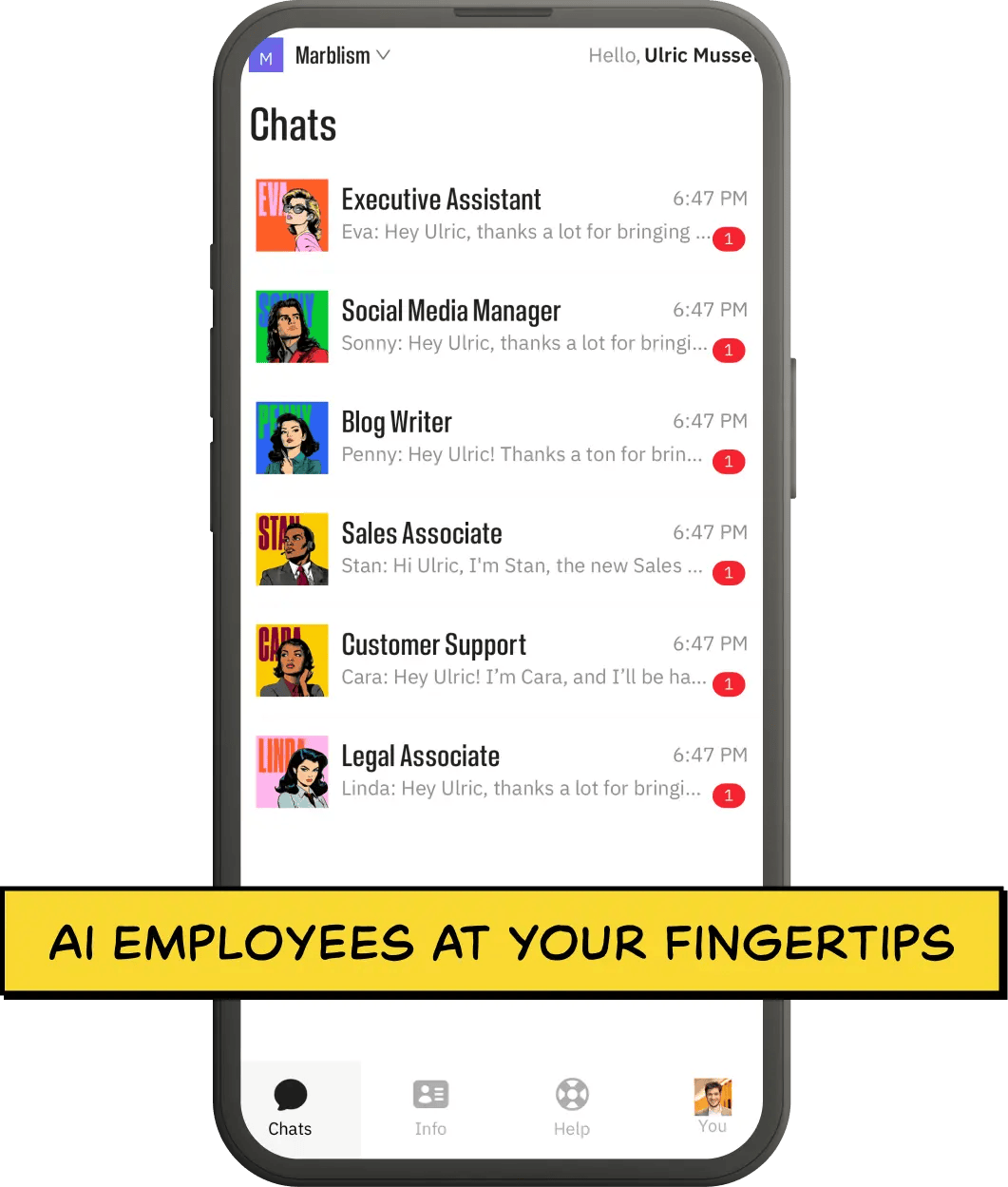
    Marblism platform showing conversations with AI employees

    Eva keeps my inbox from becoming the whole day

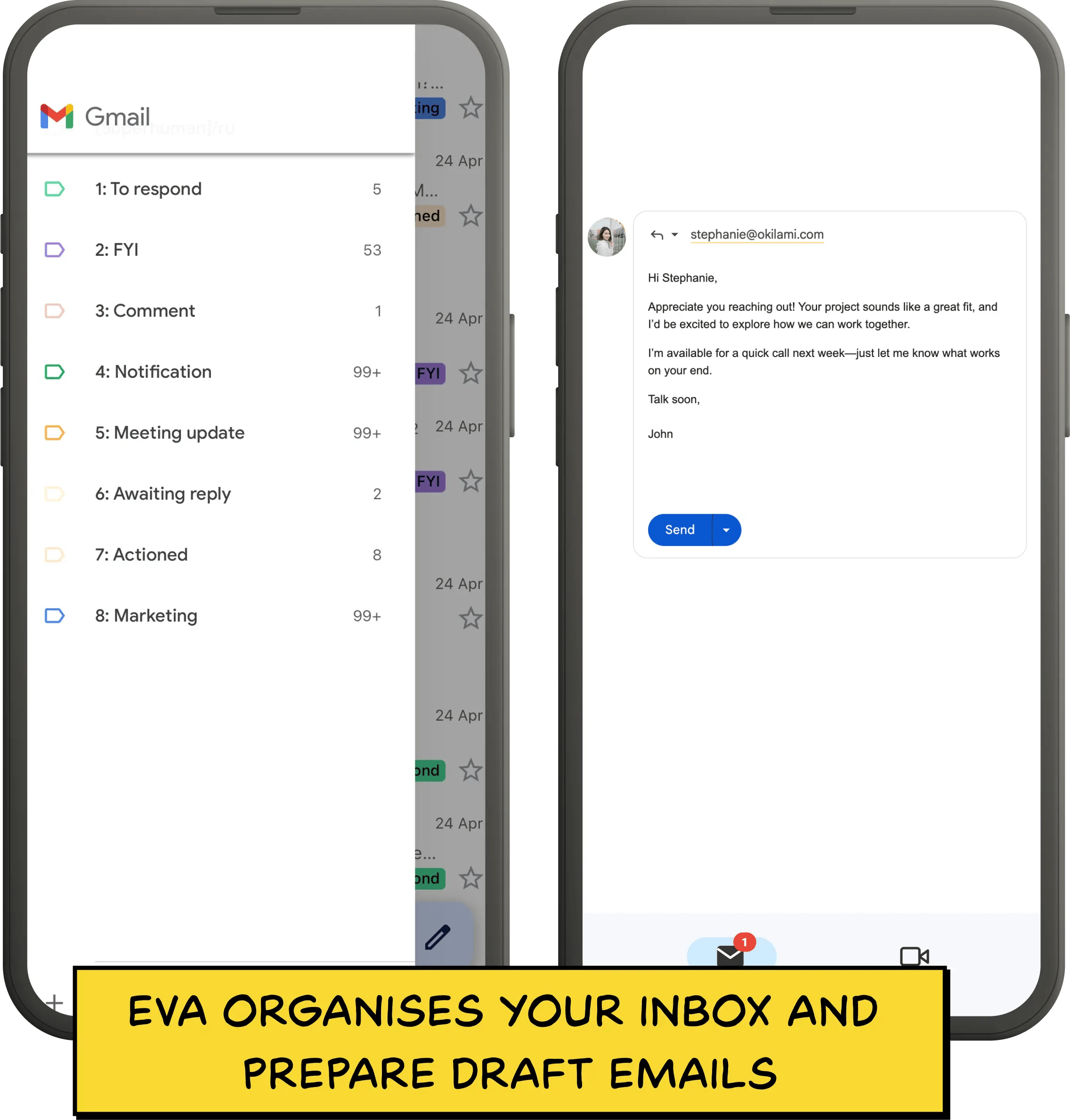
    Eva is Marblism’s AI executive assistant, and inbox organization is the everyday task I appreciate most. Instead of facing one long stream of messages, I can have emails sorted into categories, so it’s easier to see what needs a reply, what’s just for information, and what can wait.

    Eva also prepares reply drafts directly in my inbox. That’s useful when I know what I want to say but don’t want to spend time starting every message from a blank page. I can read the draft, make changes, and send it myself.

    That last part matters. Email is often personal or sensitive, and I want to check the wording before it goes out under my name. Eva helps with the first pass; I keep the final say.

    Eva, Marblism’s AI executive assistant

    Penny helps me keep the blog moving

    A blog is easy to postpone when the day fills up with messages and smaller urgent tasks. But useful articles can help people find a business and understand what it offers. That’s why Penny, Marblism’s AI blog writer, is one of my favorite tools.

    I use Penny to help create blog articles shaped around the topics our audience cares about. She can support the research and drafting process, giving me a starting point that’s much easier to review than a blank document. For a travel business, that might mean working through questions people have about trip planning, travel memberships, or starting an online travel business.

    I don’t treat “written for Google” as a promise of a particular ranking. Search visibility takes time, and an article still needs to be accurate, useful, and sound like us. I review the content and make sure it reflects our business before publishing.

    That balance works for me: Penny helps me build momentum, while I bring the personal knowledge and judgment.

    Penny, Marblism’s AI blog writer

    Sonny makes social posting more consistent

    Social media is one of those jobs that can disappear from the to-do list when something else needs attention. Then a few quiet days pass, and it’s time to start thinking up posts again.

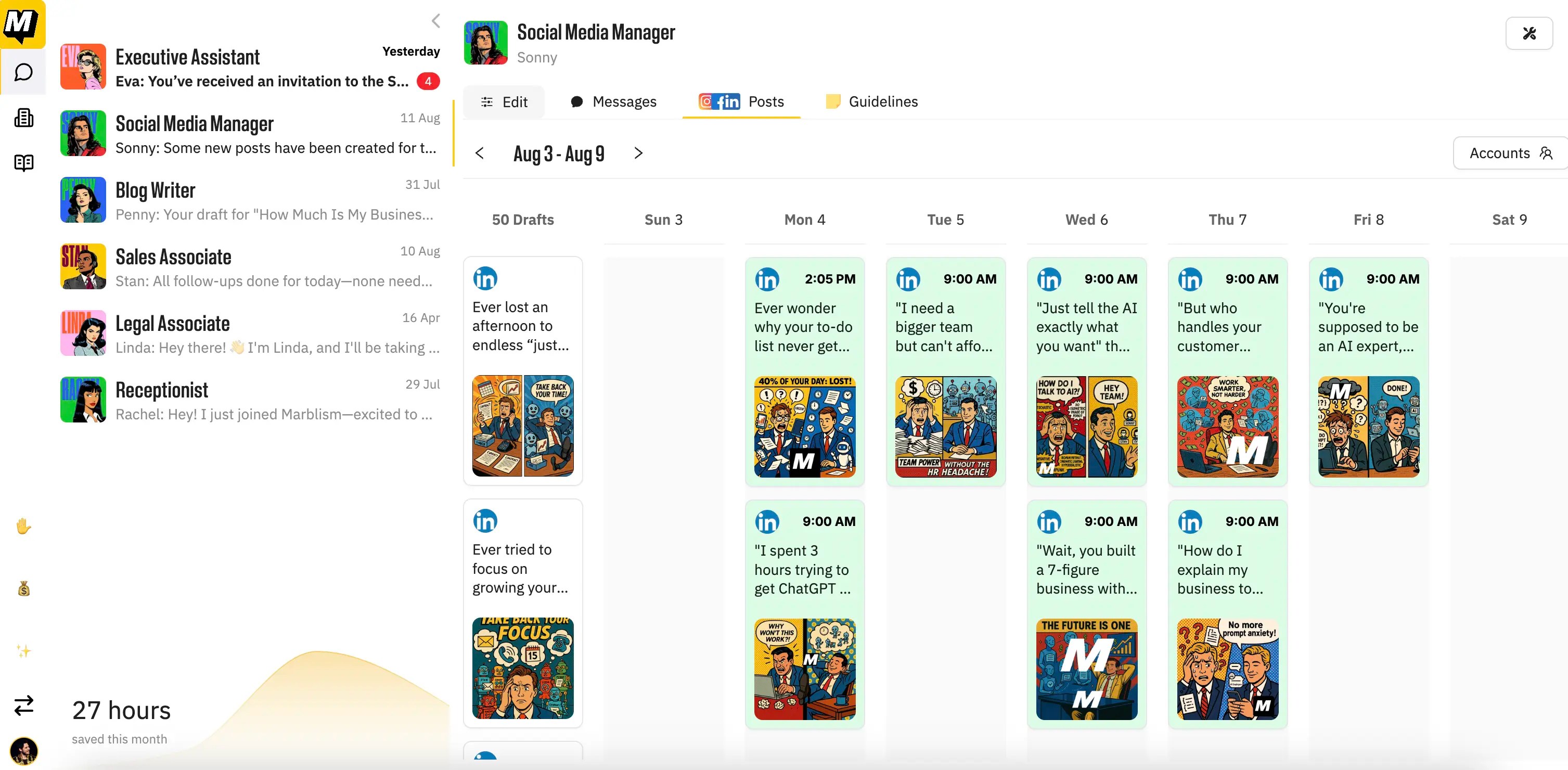
    Sonny helps me plan and prepare content for my social channels, then post on autopilot according to the setup I choose. Instead of having to create every post in the moment, I can give him direction and let the routine work continue in the background.

    I still want the posts to sound like Travel AI Money, not like a generic business account. So I check the topics, tone, and details, especially when a post mentions an offer or makes a claim. Autopilot is helpful, but it doesn’t mean “never look at it again.”

    For me, Sonny’s value is consistency. Staying visible shouldn’t require me to interrupt every other task to come up with a caption.

    Sonny, Marblism’s AI social media manager

    Rachel answers calls and handles the next step

    Even when I’m busy, or away from my desk, I don’t want a caller to be left wondering whether anyone will get back to them. Rachel, Marblism’s AI receptionist, can pick up calls, answer routine questions, book appointments, and transfer calls that need my attention.

    That creates a clearer first step for someone trying to reach the business. Rather than every call depending on whether I can answer at that exact moment, Rachel can handle the basic flow and pass along what needs a human response.

    I’d still make sure she has the right information about the business and clear instructions for what to do with different types of calls. And I wouldn’t expect an AI receptionist to make every nuanced decision on my behalf. The goal is to make routine call handling easier, not to remove my responsibility to customers.

    Rachel, Marblism’s AI receptionist

    Stan helps me stay on top of outreach

    Following up with potential customers takes care and consistency. It’s easy to put off outreach while I’m focused on current priorities, even when connecting with the right people could be important for the business.

    Stan is Marblism’s sales representative. Marblism says Stan can work with a database of 700 million leads and help identify prospects and send email outreach. In my workflow, the helpful part is having support with the prospecting and follow-up process instead of trying to keep every step in my head.

    I’m careful with outreach, though. A large contact database doesn’t automatically mean every contact is a good fit, and no email guarantees a sale. I want the audience to be relevant, the message to be accurate, and the tone to feel respectful. Stan can help with the process, but I still need to set the direction and review how it represents the business.

    Stan, Marblism’s AI sales representative

    What changed when I stopped doing every task myself

    The biggest change wasn’t that the business suddenly ran without me. It was that fewer routine tasks depended on me starting from scratch each time. Emails had drafts ready to review. Blog and social content had a place in the workflow. Calls and follow-ups had more structure.

    That gave me a little more room to step away, and to take a day off without feeling that I had to personally keep every small task moving. I still check the important details and make decisions. I just don’t have to do every first draft, first sort, or first follow-up myself.

    If you run a travel business, a side hustle, or a small company, you may recognize that feeling of wearing too many hats. AI employees won’t solve every problem, and the results depend on how well you set them up and guide them. But taking repetitive work off your plate can make a meaningful difference.

    If you’d like to explore the platform, you can take a look at Marblism here. That’s my affiliate link, which means I may earn a commission if you sign up through it, at no extra cost to you. I’d suggest reviewing the features and terms to see whether it fits the way you work.

  • Can You Make Money Selling Travel? Income Guide 2026

    Can You Make Money Selling Travel? Income Guide 2026

    Table of Contents

    Last Updated: October 14, 2026

    Can You Make Money Selling Travel? The Honest Answer

    Yes, you can make money selling travel, but the size of that income depends far more on your business model than on luck.

    Most guides stop at headline figures. A travel agent’s take-home pay is a net number, not a gross one, and the gap surprises almost everyone in year one.

    Here’s the core tension: selling travel is a real income path, but only if you treat it like a business rather than a hobby.

    Key Takeaway
    Selling travel can produce steady income, but your net earnings depend on three things: your commission split, your sales volume, and how many clients rebook with you.

    How Do Travel Agents Make Money?

    Travel agents earn money through commissions paid by suppliers, a hotel, cruise line, tour operator, or airline that pays a percentage of the booking value once the sale completes, not by charging clients directly in most cases.

    There are three common ways agents get paid:

    • Commission on bookings. A percentage of the total sale, paid by the supplier.
    • Service or planning fees. A flat fee charged to the client for your time.
    • Recurring or network income. Some business models pay you on your team’s activity, not just your own sales.

    Most beginners start with commissions alone, which caps your income at whatever you personally sell.

    Commission Rates, Splits, and When You Actually Get Paid

    Commission rates vary widely by supplier and product type. Hotels, cruises, tours, and vacation packages each pay differently, and some pay nothing at all.

    The split matters as much as the rate: if a host agency takes a share, your net drops fast.

    Payment timing trips up more new agents than anything else:

    • At booking: some suppliers pay a small deposit commission.
    • At travel completion: most pay after the client actually travels.
    • After a waiting period: some hold funds for weeks after the trip ends.

    A January booking might not pay until April or later, so plan cash flow around that gap.

    The Worked Example: $40,000 in Bookings, $3,200 in Your Pocket

    Numbers make this concrete. Imagine you book $40,000 in travel in your first year.

    Line Item Amount
    Total bookings $40,000
    Average commission rate 10%
    Gross commission $4,000
    Host agency split (20%) -$800
    Net commission $3,200
    Ongoing expenses -$600
    Take-home profit $2,600

    A 10% average rate is realistic across a mixed product range, and a 20% host split is common.

    $2,600 in year one isn’t life-changing, but it compounds: repeat clients and referrals in year two cost nothing extra to acquire.

    Watch Out
    New agents often assume commission lands in their account the week they book. Most suppliers pay after the client travels. Budget for a 60 to 90 day lag or you’ll run short on cash.

    How Much Do Travel Agents Make? Realistic Earnings by Stage

    Earnings scale with experience, volume, and repeat business. There’s no single salary figure because most agents are self-employed and paid per booking, but you control the curve: how fast you ramp, how much you keep per booking, and how much income returns without new client acquisition.

    A home-based travel agent working from a bright kitchen table with a laptop, notebook, phone, and coffee, sunlight coming through the window
    A home-based travel agent working from a bright kitchen table with a laptop, notebook, phone, and coffee, sunlight coming through the window

    Here’s a realistic stage-by-stage view:

    • Months 1-3 (learning): little to no income while you complete training, choose a host or platform, and build your first client list. This stage usually costs money rather than earns it.
    • Months 4-12 (first sales): modest income as bookings land and pay out, remembering the 60-90 day lag.
    • Year 2 (traction): repeat clients and referrals lift monthly income, because a rebooking client costs almost nothing to serve.

    The Four Levers That Actually Move Your Income

    1. Commission rate and split. Your gross rate is set by the supplier; your net rate by your host or platform agreement.

    2. Average booking value. One $8,000 cruise pays more than eight $1,000 weekend getaways at the same commission percentage.

    3. Volume with a system. More bookings mean more commission, but volume without templates, saved supplier contacts, and a repeatable intake process burns you out.

    4. Repeat and referral rate. A client who rebooks is nearly free to serve.

    Niche, Seasonality, and Ramp-Up Time

    Niche. A focused niche, like destination weddings, group travel, or cruises, lets you build supplier relationships and charge higher-value bookings. Generalists compete on price.

    Seasonality. Travel demand isn’t flat: summer trips often book in the first quarter, while winter holiday travel books in late summer and early fall.

    Ramp-up time. Expect the first 6-12 months to be a build phase.

    Key Takeaway
    Your income is not a single number. It’s commission rate times split times booking value times volume, plus repeat business. Improve any one lever and the whole equation moves.

    What Changes Your Numbers: Niche, Volume, and Repeat Business

    Three levers move your income more than anything else.

    Niche. A focused niche, like destination weddings, group travel, or cruises, lets you build supplier relationships and charge higher-value bookings. Generalists compete on price. Specialists don’t have to.

    Volume. More bookings mean more commission. But volume without a system burns you out. This is where AI tools and templates help, because they cut the admin time per booking.

    Repeat business. A client who rebooks is nearly free to serve.

    Travel Agent Startup Costs: What You Pay Before Your First Booking

    Startup costs for a travel agent side hustle are usually low, but not zero, and depend almost entirely on your business model. Two agents can sell the same cruise and keep very different amounts, because one pays a host agency a share and the other carries the compliance burden alone. Here’s how the main models compare.

    Host Agency

    You operate under an established agency’s credentials and supplier relationships, paying a monthly or annual fee plus a percentage of your commission.

    Message Me on WhatsApp →

    • Startup cost: low to moderate (training, host fee, basic tools).
    • Control: moderate, you own client relationships but follow the host’s supplier list and compliance rules.
    • Support: high, training, supplier access, and often a community.

    This is the most common entry point for beginners because it removes the hardest setup work.

    Independent (Direct with Suppliers)

    You register your own business and apply to suppliers directly for commission accounts.

    • Startup cost: moderate to high, registration, insurance, and often minimum sales thresholds to keep supplier accounts active.
    • Control: high, you set your own fees, terms, and client experience.
    • Support: low, you are your own back office.

    The trade-off: you keep more per booking but absorb every compliance, insurance, and admin cost the host would have handled.

    Franchise

    You buy into an established brand with a proven playbook.

    • Startup cost: high, franchise fees and ongoing royalties are common.
    • Control: low to moderate, brand standards constrain how you operate.
    • Support: high, marketing, training, and systems come with the brand.

    Franchises suit agents who want a recognizable name and will pay for it.

    Affiliate

    You refer clients to a booking platform and earn a share of the commission it receives.

    • Startup cost: very low. Often just a website or social presence.
    • Control: low. You don’t own the client relationship or set the terms.
    • Support: low. The platform handles fulfillment.

    Affiliate works as a test of whether you enjoy the work before committing to a full agency setup.

    Direct-to-Consumer (Your Own Brand)

    You build your own travel brand and sell directly, often with a niche focus.

    • Startup cost: moderate, website, branding, marketing, and compliance.
    • Control: highest, you own everything.
    • Support: none unless you buy it.

    The Cost Buckets, Regardless of Model

    Whichever model you pick, the same four buckets show up:

    • Training and certification. Varies by program and provider.
    • Host, franchise, or platform fee. Monthly, annual, or a commission split.
    • Business setup. Registration, insurance, and a separate bank account.

    You can start lean with a phone, a laptop, and a training program, then reinvest early commissions into better tools. The mistake is choosing a model by upfront cost alone: a cheap model with a punishing split can cost more over a year than a pricier model with better terms.

    Pro Tip
    Open a separate bank account on day one. Mixing travel income with personal spending makes tax time painful and hides whether you’re actually profitable.
    Watch Out
    Before you sign with any host, franchise, or platform, read the termination clause. If you leave, do you keep your client list? Do you keep commissions on bookings already made? The answer changes the true cost of the model.

    Travel Agent Side Hustle: Can You Run This Around a Full-Time Job?

    Yes, a travel agent side hustle fits around a full-time job, but only with realistic expectations. This is not passive income, it’s a service business, and clients expect replies. The good news is flexibility: answer messages in the evening, build itineraries on weekends, and take supplier training during lunch breaks.

    What makes it work:

    • Set office hours. Tell clients when you’re available so they don’t expect instant replies.
    • Use templates. Reuse itineraries and email scripts to cut planning time.
    • Automate follow-ups. Tools that remind you to check in with past clients drive repeat bookings.

    The hard part is consistency: two hours a week grows slowly, while ten hours a week can produce real income within a year.

    Your First 90 Days: A Step-by-Step Launch Plan

    A structured first 90 days beats scattered effort every time:

    Days 1-30: Learn and set up

    1. Complete your training program.
    2. Choose a host agency or platform.
    3. Set up your business basics: bank account, email, and a simple booking process.
    4. Pick one niche to focus on.

    Days 31-60: Build your pipeline
    5. Create a short list of 20 potential clients from your network.
    6. Write a simple outreach message and send it.
    7. Practice building three sample itineraries in your niche.
    8. Join one travel community or supplier training group.

    Days 61-90: Book and learn
    9. Close your first booking.
    10. Ask every client for a referral after they travel.
    11. Track your numbers: bookings, commission, and hours spent.
    12. Review what worked and double down on it.

    By day 90 you should have at least one booking and a clear sense of your real hourly return. That data tells you whether to scale up or adjust.

    Licensing, Tax, and Consumer Protection: The Boring Parts That Protect You

    Rules for travel sellers vary by country and region, and getting them wrong can cost you, so check local requirements before you take payment.

    What to sort out early:

    • Business registration. Most places require you to register as a sole trader or business.
    • Tax. Travel commission is income, track and report it, and register once income passes your country’s threshold.
    • Consumer protection. Some regions require specific protection or bonding for packaged holidays.

    For official guidance, check your national tax authority and consumer protection body. In the UK, for example, GOV.UK guidance on setting up a business covers registration and tax basics. If you sell flights or packages, review ABTA’s guidance on travel industry regulations for how consumer protection applies. And for tax rules on self-employed income, HMRC’s guidance for sole traders is the starting point.

    The boring parts protect you. Skip them and a single dispute can wipe out a year of commission.

    Watch Out
    Never take client money into your personal account or promise protections you can’t back up. If a booking goes wrong, unclear terms and no insurance leave you personally liable.

    Conclusion: Selling Travel Is a Real Income Path, Not a Lottery Ticket

    Selling travel rewards patience and systems, not hype. Year one is modest; years two and three, with repeat clients and a focused niche, are where income compounds.

    If you want a faster route, Travel AI Money gives you the tools to build it. Members get access to wholesale travel pricing that isn’t publicly available, AI tools to run a global online business from a smartphone, and full training with a dedicated mentorship system.

    Message us on WhatsApp to get started with Travel AI Money and turn travel planning into a real income stream.

    Frequently Asked Questions

    How do travel agents earn commissions, and when do they get paid?

    You earn a percentage of the booking value, paid by the supplier (hotel, cruise line, tour operator) rather than the client. Standard commission rates run around 10-15% on hotels and vacation packages, with cruises often similar and flights usually paying nothing. Timing matters more than the rate: most suppliers pay 30 to 90 days after the guest checks out or the trip ends, not at booking. If the client cancels before travel, the commission is normally reversed, so you should never spend it early.

    Can selling travel work as a side hustle if I already have a full-time job?

    Yes, and it suits shift-free, flexible schedules best. A travel agent side hustle typically starts with 5 to 10 hours a week: two evenings for client research and quotes, one weekend block for follow-ups and supplier emails. The work is asynchronous, so you can answer a client at 9pm and confirm a booking the next morning. The realistic constraint is your first 90 days, when you are building a client base with little income to show for it. After that, repeat business and referrals do more of the selling for you.

    Do you need a license to sell travel?

    In most markets, no government licence is required to sell travel as an independent agent. What you do need is a host agency or consortium that provides supplier access, a booking system, and often errors and omissions insurance. Some countries and states require registration if you handle client money directly, and consumer protection rules differ, so check your local requirements before taking payments. Selling travel through an established host keeps you inside their compliance framework, which is the simplest route for a beginner.

    How long does it take to earn money as a travel agent?

    Expect your first small commission within 30 to 90 days of your first booking, with the payment itself landing 30 to 90 days after travel. Realistic time-to-income looks like this: months 1 to 3 are about training and your first two or three bookings, months 4 to 6 bring repeat clients and a steadier pipeline, and month 12 is when most agents see predictable monthly income. Seasonality also matters, with bookings peaking in January to March and again in September to October.

  • Travel Community in 2026: Why Travellers and Travel Business Owners Both Need One

    Travel Community in 2026: Why Travellers and Travel Business Owners Both Need One

    Travel planning can mean hours of scrolling through prices, reviews and recommendations. Building an online travel business can feel just as solitary: you’re learning new tools, creating content and trying to work out what to do next.

    A good travel community can help with both. It brings people together around shared travel experiences, practical member benefits and support, whether you simply want to plan a better-value getaway or you’re curious about building a business from home.

    But a community should offer more than a busy chat feed. In 2026, the real value is in useful resources, clear terms and people who are willing to help.

    What is a travel community in 2026?

    A travel community is a network of people connected by a shared interest in travel. It might help members discover destinations, compare travel options and join group trips. For people exploring a home based travel business, it can also offer training, mentorship and tools for sharing travel membership benefits.

    That makes it different from a Facebook group or forum, not because those spaces can’t be useful, but because a community can connect conversation with practical services. Depending on the programme, those may include member-only travel rates, organised group experiences, referral rewards and business support.

    The important question isn’t how many people are in the group. It’s whether the community offers value you understand and can use.

    A traveller comparing accommodation details on a phone in a welcoming resort lounge at dusk

    Why travellers can benefit from belonging

    When you’re planning a holiday, it helps to hear from people who have travelled, stayed at a property or joined a trip. A community can make it easier to ask practical questions and find recommendations that reflect real experiences, not just another page of search results.

    Some travel communities also offer member rates on hotels, resorts, cruises or curated trips. These prices and options can vary by date, destination and availability. A member rate isn’t automatically the best rate for every booking, so compare the full cost, room details, fees, cancellation terms and what’s included before deciding. Our guide to how to get wholesale hotel rates explains why the details matter.

    A wholesale travel club may also make it easier to explore trips with people who share your interests. Group travel can take some of the guesswork out of planning and create a natural way to meet others. Before booking, review the itinerary, payment schedule, accessibility details and cancellation policy. You should know what’s planned, and where you have room to make your own choices.

    Why community matters when you’re building a business

    If you’re interested in an online travel business, learning alongside others can make the process feel more manageable. You can ask questions, practise new skills and get feedback as you build confidence.

    A useful community provides more than encouragement. Look for practical training, ongoing mentorship and clear guidance on how the business works. For example, support might help you understand how to introduce a membership, create helpful content and follow up respectfully with people who ask for information.

    AI tools can help with everyday tasks, too. They may assist with drafting social posts, brainstorming video scripts or organising follow-ups, while you review the information and keep your own voice. The University of Minnesota Extension offers guidance on AI tools for small tourism businesses. AI can save time, but it doesn’t replace good judgement, accurate details or genuine conversations.

    Travel AI Money combines travel membership access with training, mentorship and AI-supported business tools. If you’d like a closer look at the approach, you can read why join a travel business community or visit our About page.

    A home-based entrepreneur using a laptop and phone to plan travel content in a warm, modern home office

    How travel rewards and referrals can work

    A travel rewards program may offer credits, loyalty benefits or other incentives under its specific rules. In some communities, members may also be eligible for a referral reward when someone they introduce joins or makes a qualifying booking.

    The details vary, so check what action qualifies, when a reward is issued, how it can be used and whether any expiry dates or exclusions apply. Don’t assume a reward will cover a particular trip or that every referral will qualify.

    If you share a recommendation and may receive a benefit for doing so, be open about that connection. The Federal Trade Commission’s endorsement guidance explains why it’s important for people to understand when a recommendation is connected to a material benefit.

    Referrals should be an optional way to share something you value, not a reason to pressure friends or family. And if you’re considering ways to make money with travel, remember that income is not guaranteed. Results depend on the business model, your activity, costs and other factors.

    Signs of a healthy travel community

    Before joining, take a look beyond the headline benefits. A healthy community should make it easy to find:

    • Clear membership terms: Costs, renewal rules, cancellation details and exclusions are explained before you commit.
    • Useful, current information: Members can ask questions and get practical, relevant answers.
    • Respectful conversation: Different experiences and honest questions are welcomed.
    • Transparent rewards: Eligibility, timing and restrictions are stated plainly.
    • Real support: Training and mentorship are available, not just promised.
    • A balanced view of business: The opportunity is explained without income guarantees or pressure to recruit.
    • Thoughtful use of technology: AI supports the work, while people remain responsible for the advice and information shared.

    A thriving community doesn’t need to be perfect or online around the clock. It should be active enough to help, clear about what it offers and willing to answer reasonable questions.

    How to get started without overcommitting

    You don’t need to decide everything at once. Use this simple checklist:

    1. Decide what you want most. Are you looking for travel options, a group experience, rewards, business support, or a mix?
    2. Ask for the details. Review membership costs, booking conditions, reward terms and cancellation policies.
    3. Compare a real trip. Check the same dates, room type and total price across options, including fees and flexibility.
    4. Speak with the community. Ask how members get support and what training or tools are available.
    5. Take a small next step. Learn more, ask a question or attend an introduction before making a commitment.

    A small group of travellers enjoying a coastal walk together in the warm evening light

    Find the kind of travel community that fits you

    The right community can give you more than a place to talk about travel. It can connect you with useful member benefits, shared experiences and people who help you learn. If you’re exploring a home based travel business, it can also offer a framework for developing skills and using modern tools, at a pace that makes sense for you.

    Take your time, review the terms and ask whatever you need to ask. If you’d like to learn more about wholesale travel, rewards and the AI-powered business opportunity, message our team on WhatsApp. No pressure, just a conversation to help you explore your options.

  • Work From Home Travel: How to Build an Online Travel Business From Your Phone in 2026

    Work From Home Travel: How to Build an Online Travel Business From Your Phone in 2026

    Could your love of travel become part of the way you work? In 2026, a work from home travel business can be built around a phone, a reliable internet connection and a simple routine. You don’t need to start with industry experience, but you do need to be willing to learn, show up consistently and build real relationships.

    At Travel AI Money, the model brings together a travel membership, rewards opportunities, business training and AI-supported marketing tools. Members can explore travel benefits and choose whether to share the membership as an online business. Any rewards, commissions, costs and eligibility depend on the current programme terms. Results aren’t automatic.

    What does a work-from-home travel business involve?

    An online travel business doesn’t have to mean managing a storefront or creating a complicated booking platform. One option is to share a travel membership with people who may be interested in its travel features, then build your business through conversations, helpful content and follow-up.

    The product is the membership and its travel-related benefits, not a promise that every booking will be the lowest-priced option. Rates, availability and conditions can vary, so it’s sensible to compare the total price and terms before booking. Our guide to how wholesale hotel rates work explains why comparing the details matters.

    Some people explore the membership mainly for travel. Others are curious about the business opportunity. If you decide to share it, your work may include explaining how it works, answering questions, creating social content and following up respectfully with people who have asked to learn more.

    What could a typical week look like?

    There’s no single schedule. You might fit business-building around a job, family life or other commitments. Here’s one example of a flexible routine, not a required schedule or a promise of results.

    A remote entrepreneur reviewing a phone and notebook at a coastal café terrace at dusk

    • Plan: Pick a few useful topics to share, such as travel ideas, membership features or a lesson from your training.
    • Create: Draft and publish a short post, video or message. Keep it clear and personal.
    • Connect: Reply to questions and start genuine conversations with people who have shown interest.
    • Follow up: Check in with people who asked for more information, without sending unwanted or repeated messages.
    • Learn and review: Use training or mentorship, then look at which activities led to meaningful conversations.

    Some weeks will be busier than others. The useful habit is to make time for steady, customer-focused activity rather than waiting for a perfect moment, or expecting one post to build a business for you.

    How can AI make the hardest parts easier?

    Starting something new can feel challenging when you’re unsure what to post, how to explain the offer or when to follow up. AI tools can help you get past the blank page and organize routine tasks.

    A person using a smartphone and laptop at a calm home workspace with a travel view in the background

    With appropriate training, AI may help you:

    • Brainstorm content ideas and draft captions or video scripts.
    • Turn one topic into several formats, such as a post, email and short video outline.
    • Organize questions and prepare clear responses.
    • Create reminders and structure follow-up so interested people aren’t forgotten.
    • Plan a manageable weekly routine.

    Think of AI as a helpful assistant, not a replacement for your judgment or your relationships. Review everything before sharing. Check that membership details and travel information are current, and don’t enter sensitive personal information into tools unless you understand how it will be handled. Keep messages relevant and respectful, and contact people only in ways they have agreed to.

    What do you actually need to get started?

    You can begin simply. A smartphone and reliable Wi-Fi can cover many everyday tasks, especially when your learning materials and business tools are designed for mobile use. A laptop may be convenient, but it isn’t a measure of whether you can learn.

    More important are:

    1. Time you can protect. Choose a realistic routine that fits your life.
    2. A willingness to learn. Use the available training and ask questions when something isn’t clear.
    3. A helpful way to communicate. Share information honestly and listen to what people are looking for.
    4. A clear view of costs and terms. Before joining, review the membership options, ongoing fees, reward rules and business compensation plan.
    5. Patience and consistency. Building trust and finding the right audience takes effort. Results can vary.

    If you’re exploring an online travel business with Travel AI Money, take time to understand the membership and business model before deciding whether it suits you.

    Is this right for you?

    A home-based travel business may be worth exploring if you enjoy travel, like connecting with people and are comfortable learning how to share an offer online. It may be a better fit if you’re curious about a flexible side project than if you need a guaranteed or immediate income.

    It may not suit you if you dislike communication, don’t want to make time for consistent activity, or would need to rely on quick earnings. An opportunity can offer training and tools, but it can’t guarantee customers or income.

    Our post on joining a travel business community offers more questions to consider when comparing options. Review the written details, including costs, cancellation terms and how compensation works. The FTC’s guidance on endorsements and testimonials is also a useful reminder to be clear and honest when sharing experiences or recommendations.

    A simple getting-started checklist

    A focused home workspace with a smartphone, laptop and handwritten weekly checklist in warm evening light

    • Decide whether you’re most interested in travel benefits, the business opportunity or both.
    • Read the membership details, fees, reward conditions and compensation plan.
    • Choose one audience you understand and one useful topic to talk about.
    • Set up a simple weekly schedule you can realistically maintain.
    • Use training and AI tools to draft ideas, then check the facts and make the message your own.
    • Keep track of questions and follow up only where it’s appropriate.
    • Review what you’re learning and adjust without expecting instant results.

    A flexible start, with realistic expectations

    A work-from-home travel business can give you a way to explore a travel-related opportunity from your phone, with training, mentorship and AI tools to support your learning. But the phone is only the starting point. Progress depends on the time you invest, the conversations you build and how well the model fits your goals.

    If you’d like to understand the membership or business opportunity, you can start a conversation with our team. Ask questions, review the details and decide in your own time.

  • Travel MLM vs. Wholesale Travel Club: Which One Actually Saves You Money in 2026?

    Travel MLM vs. Wholesale Travel Club: Which One Actually Saves You Money in 2026?

    If you’re comparing a travel MLM with a wholesale travel club, it helps to separate two things that are often presented together: access to travel prices and the chance to make money with travel by sharing a membership.

    One is about what you might pay for a trip. The other is about how a business opportunity works. Some companies combine both, but that doesn’t mean the costs, benefits or risks are the same.

    So, which one saves you money? The honest answer is: it depends on the actual price you can book, the terms attached to it and every fee you pay. Here’s how to assess the options before joining.

    What is a travel MLM?

    “MLM” means multi-level marketing. In a travel MLM, participants may be able to refer memberships or travel products and earn commissions under a compensation plan. Depending on the plan, participants may also receive commissions or bonuses connected to people they introduce, and, in many cases, further levels of referrals. Those levels are commonly called a downline. Personally I don't like the term and prefer to call my group of reps my team. 

    There may be one or more fees to join or stay active. These could relate to membership, platform access or other services, so it’s important to ask for a complete, current fee schedule and read the terms yourself.

    A travel MLM may offer real travel services. But that alone doesn’t tell you whether the business opportunity is a good fit. Look at how compensation is actually earned, what it costs to participate and whether the travel benefits are useful to you even if you never refer anyone.

    The FTC’s guidance on multi-level marketing explains why it’s important to assess a company’s actual practices and incentives, not just the label it uses. Earnings are not guaranteed, and building a business takes time and effort.

    What is a wholesale travel club?

    A wholesale travel club generally charges a membership fee for access to member-only travel rates. Depending on the program, that might include hotels, resorts, cruises or group trips.

    The word “wholesale” can sound like a promise that every price is lower. It isn’t. Travel prices change with dates, destination, availability, room type and booking conditions. A member rate may be attractive on one trip and less competitive on another. The only useful comparison is between the complete prices for the same trip, with the same terms.

    Before relying on a headline discount, compare the member price with the hotel’s own website and other public booking options. Include taxes, fees, cancellation rules and any membership cost in your calculation. Our guide to how to compare wholesale hotel rates walks through what to check.

    A traveler checks hotel details on a laptop in a warmly lit hotel lounge

    Travel MLM vs. wholesale travel club: a side-by-side comparison

    What to compare Travel MLM Wholesale travel club
    Main focus Travel access plus a possible referral-based business opportunity Access to member-only travel rates
    How you may pay Membership or enrollment fees; other costs may apply, depending on the plan Usually a recurring or annual membership fee; check for booking and other charges
    How you may earn Commissions or bonuses may be available through referrals and, depending on the plan, multiple levels A club is primarily a travel product; any referral rewards should be checked separately
    What to verify Compensation plan, eligibility rules, all costs and any income disclosures Exact rates, total price, availability and booking terms
    Can you benefit without referrals? Check whether membership and travel access make sense on their own Often designed around member access, but compare the cost with your expected use
    Is a saving guaranteed? No, compare the rate for each trip No, rates and availability vary

    This comparison is a starting point, not a substitute for the specific company’s terms. Some programs mix these features, so ask which parts of the offer are optional and what you pay for each.

    How to check whether a member rate really saves you money

    Pick a trip you might actually book, not just a sample destination from a presentation, and compare:

    1. The exact property, dates, room and number of guests. Small differences can change the price.
    2. The full total. Include taxes, resort fees, booking charges and any foreign-currency costs.
    3. The booking conditions. A non-refundable member rate isn’t directly comparable with a flexible public rate.
    4. The membership cost. If you join mainly to book one trip, include the fee in that trip’s effective cost.
    5. More than one example. Check several dates or destinations if you travel regularly.

    For a cruise, resort stay or group trip, compare the same cabin or room category, inclusions and cancellation terms. A lower headline figure may not mean a lower overall cost.

    Travelers enjoying an ocean view from a cruise ship deck at sunset

    Questions to ask before you join

    A clear conversation should make it easier, not harder, to understand what you’re considering. Ask:

    • What is the total cost to join and remain a member?
    • Are there separate fees for the travel platform or business tools?
    • Can I review member rates before deciding?
    • What are the cancellation, refund and renewal terms?
    • If there’s an income opportunity, what actions qualify for commissions?
    • Can I use the travel membership without referring anyone?
    • Is there an income disclosure showing typical results and expenses?

    The FTC’s review of MLM income disclosure statements is a useful reminder to look beyond success stories. Ask what the figures include, how many participants earn nothing and whether expenses are reflected. A testimonial is one person’s story, not a promise of what you will earn.

    How to spot red flags

    Take your time if you encounter:

    • Pressure to join immediately or recruit friends and family.
    • Big income promises without clear, reliable supporting information.
    • Vague answers about recurring fees, renewals or cancellation.
    • “Save up to” claims without exact, comparable prices.
    • A pitch focused mainly on recruiting, with little detail about travel bookings.
    • Claims that you need to recruit to make the travel membership worthwhile.

    A company should be comfortable with you reviewing the terms, comparing prices and asking questions. If you feel rushed, it’s reasonable to pause.

    Where Travel AI Money fits

    Travel AI Money combines member travel access with an optional business opportunity. Members can explore member-only pricing on travel, while anyone curious about the business side can learn how our online travel business works: sharing memberships and using AI tools for content, communication and follow-up. Training and mentorship are part of the support offered.

    Making money with travel appeals to a lot of people, and it’s fair to ask exactly how it works before deciding anything. That blend of real travel perks and a flexible business you can run from your phone is what draws many of our members in. But neither travel savings nor business earnings are automatic. Member rates vary, and business results depend on individual activity and the applicable terms.

    The best approach is to evaluate each part separately. First, decide whether the travel membership offers value for trips you’re likely to take. Then, if the business side interests you, review its fees, compensation plan and expectations. Our about page shares more about the company and its approach.

    So, which one actually saves you money?

    A wholesale travel club may save you money when a like-for-like member rate beats your best public option by more than the membership and booking costs. A travel MLM may include that kind of travel access, alongside a referral business opportunity, but any potential income is a separate question, with its own effort, costs and uncertainty.

    Compare the booking, read the terms and decide based on your own travel plans. There’s no pressure to choose before you have the details.

    If you’d like to see member rates and understand how the business side works, message us on WhatsApp. We’re happy to answer your questions so you can explore the options at your own pace.

  • How to Start a Travel Business From Home in 2026

    How to Start a Travel Business From Home in 2026

    Table of Contents

    Last Updated: October 12, 2026

    How to Start a Travel Business From Home: A Step-by-Step Path

    Learning how to start travel business from home begins with one decision: pick a business model before you spend money. A home-based travel agency is a real, regulated business, not a hobby.

    Person working on a laptop at a home desk to start a travel business with passport and coffee nearby
    Person working on a laptop at a home desk to start a travel business with passport and coffee nearby

    You need a host agency or franchise relationship, a registered business, seller-of-travel credentials where required, a niche, and a marketing plan.

    This guide walks the full path in order, from your first 90 days to your first commission cheque.

    What a Home-Based Travel Business Actually Involves

    A home-based travel agency sells travel products (flights, hotels, packages, cruises) and earns commission from suppliers, working from a laptop and phone with no storefront or staff.

    The day-to-day work is less glamorous than the name suggests:

    • Quoting trips and comparing supplier options
    • Building itineraries and managing bookings
    • Chasing payments and handling changes

    Most new agents spend far more time on marketing than booking.

    Your First 90-Day Launch Plan

    Treat the first 90 days as a setup sprint, not a selling sprint.

    Days 1-30: Decide and register

    • Choose your model (host agency, franchise, or independent)
    • Register your business and open a business bank account
    • Start host agency due diligence

    Days 31-60: Credentials and training

    • Complete seller-of-travel registration if your state requires it
    • Finish your host agency’s training program
    • Pick your niche and write a one-page business plan

    Days 61-90: First clients

    • Set up a simple website and social profiles
    • Tell your warm network you are open for business
    • Quote your first five trips, even at low margin
    Pro Tip
    Book your own travel through your new business first. It teaches you the booking tools, the commission flow, and the supplier quirks before a paying client is watching.

    Host Travel Agency vs Independent Travel Agent: Which Model Fits You?

    The host agency vs independent travel agent question comes down to one trade-off: access versus control. A host agency gives you supplier relationships, booking tools, and higher commission tiers for a cut of your earnings. Going independent means you keep more per booking but build every supplier relationship yourself.

    Model What You Get What You Give Up Best For
    Host agency Supplier access, booking tools, training, higher commission tiers A share of commission, some control over branding Beginners and part-time agents
    Travel franchise Brand name, proven systems, marketing support Franchise fees, strict operating rules Agents who want a ready-made playbook
    Fully independent Full commission, full control No supplier access, no support, slower start Experienced agents with existing clients
    Travel membership or club Wholesale rates, community, recurring income potential Membership cost, network-building effort People who want travel perks plus income

    For most first-timers, a host agency or membership model is faster. Building supplier relationships from zero takes months.

    How to Run Due Diligence on a Host Agency Contract

    Read the contract like a lease. Focus on five things:

    1. Commission split – what percentage you keep, and whether it improves with volume
    2. Fees – monthly, annual, and per-booking charges, plus any setup cost
    3. Exit terms – notice period, penalties, and whether your client list stays yours
    4. Training – is it live, recorded, or one-on-one, and is it included or extra
    5. Supplier access – which booking tools and suppliers you actually get
    Watch Out
    The most common mistake is signing a contract with a long lock-in and no clear exit. If you cannot leave within 30 days without penalty, treat that as a red flag and keep looking.

    Travel Agent Startup Costs: What You’ll Actually Spend

    Travel agent startup costs fall into three buckets: one-time setup, ongoing fees, and marketing. One-time costs are small; ongoing fees catch people out.

    One-time costs

    • Business registration and licences
    • Website domain and basic setup
    • Initial training or certification

    Ongoing costs

    • Host agency or membership fees
    • Booking tool subscriptions
    • Marketing and advertising

    Variable costs

    • Client acquisition spend
    • Travel for research and networking

    Check Travel AI Money‘s pricing page for current figures rather than guessing.

    Break-Even Scenarios for a Part-Time Agent

    Break-even is simple: enough bookings to cover monthly fees plus marketing spend.

    • Low-overhead path: minimal fees, warm-network marketing only. Break-even within a few bookings.
    • Growth path: higher monthly fees for better tools and training. Break-even takes more bookings, but the ceiling is higher.

    Track one number weekly: bookings closed versus monthly cost.

    Key Takeaway
    Your first goal is not profit. It is covering your monthly costs with bookings. Everything after that is growth.

    Building Your Travel Agent Business Plan and Choosing a Niche

    A travel agent business plan does not need 40 pages. It needs four answers on one page.

    1. Who do you serve? Pick a specific group, not “everyone who travels.”
    2. What do you sell? Flights, packages, group trips, or a mix.
    3. How do you reach them? One or two channels you will actually use.
    4. What does success look like in 12 months? A number, not a feeling.

    Niche choice matters more than most new agents admit: it gives you a target market and sharpens your online presence. Popular starting niches include group travel, honeymoons, faith-based trips, and family reunions.

    Pro Tip
    Pick a niche you already belong to. If you are a parent, you understand family travel pain points better than any generic agent. That knowledge converts.

    Seller-of-travel rules are the most misunderstood part of starting a home-based travel business. Here is the concrete picture.

    The key distinction: who is regulated.

    In the United States, there is no federal seller-of-travel license.

    Common patterns you will encounter:

    Message Me on WhatsApp →

    • Registration states: You file with a state agency (often the Department of Consumer Affairs, Attorney General, or a dedicated travel regulator), pay a fee, and may need a surety bond or trust account for client funds.
    • Bond requirements: A surety bond is a financial guarantee claimable if you mishandle client money. Amounts and credit requirements vary.
    • Exemptions: Some states exempt agents under a registered host agency, or who never hold client funds directly. This is why your business model and legal setup are linked.

    How to check your own jurisdiction (do this before your first booking):

    1. Search your state’s consumer protection or attorney general website for “seller of travel” or “travel promoter.”
    2. Ask the relevant office directly: “Do I need to register as a seller of travel if I am a home-based agent working under a host agency?” Get the answer in writing.
    3. Check whether your host agency’s registration covers you, and get that in writing too.
    4. If a bond is required, ask your insurance broker what underwriting looks like for a part-time home-based agent.

    Outside the U.S.

    Rules differ by country. In the UK, selling certain travel packages can trigger Package Travel Regulations obligations and may require ABTA membership or ATOL protection.

    Your legal setup checklist

    • Choose a business structure (sole trader, LLC, limited company) and register it
    • Register your business name and get any required local licenses
    • Check state, provincial, or national seller-of-travel requirements and document your findings
    Watch Out
    Do not take a booking before you know your registration status. A legal problem costs far more to fix than to prevent, and consumer protection agencies do not care that you were “just starting out.”

    U.S. Department of State travel resources is a starting point for travel-industry context, but your state’s consumer protection office or attorney general is the authority on whether you need to register. When in doubt, ask them directly and keep a record of the answer.

    How to Get Clients as a Travel Agent: Marketing and Lead Generation

    Learning how to get clients as a travel agent separates earners from hobbyists. Most new agents have tools but no pipeline. Fix the pipeline first.

    Your lead generation should run on three channels:

    • Warm network: friends, family, colleagues, and their referrals. This is your fastest first sale.
    • Social media: one platform, posted to consistently. Show trips, not sales pitches.
    • Website: a simple site with a clear offer and a way to contact you.

    Client retention matters as much as acquisition. A repeat client costs nothing to re-acquire and books more each year. Send a follow-up after every trip and a check-in before peak booking season.

    Best For
    Part-time agents with a full-time job. Warm-network marketing and one social channel fit around a 9-to-5 far better than paid ads.

    Handling Payments, Privacy, and Client Data Safely

    Client payments and personal data are your biggest liability. Treat them that way.

    • Use your host agency’s or supplier’s payment system where possible, so you are not holding client funds
    • Never store card details in a spreadsheet or notebook
    • Keep passport and ID copies in a secure, access-controlled location

    Data protection rules apply to small agents too; a breach can be a legal problem.

    How Travel Agent Income and Commissions Work in Practice

    Travel agent income comes from two places: commissions paid by suppliers and service fees you charge clients.

    How commissions work

    Three timing realities that catch new agents off guard:

    1. Commission is usually paid after the client travels, not when they book. You can work in January and get paid in July. Plan cash flow around this.
    2. Cancellations and chargebacks claw back commission. If a client cancels, the supplier may reverse commission months after you were paid, and you may owe a fee. That is why a clear cancellation policy and deposit structure matter.
    3. Commission splits reduce your take. Your host agency takes a share before you are paid, so a generous-looking split can shrink fast once fees are deducted.

    How service fees work

    A service fee is a flat fee charged to the client for your time and expertise, paid upfront.

    Common patterns:

    • Flat fee per booking (varies by trip complexity)
    • Flat fee per person or per itinerary
    • Retainer or planning fee for complex trips

    Realistic income variability

    Travel agent income is lumpy. A strong month can be followed by a quiet one.

    A common pattern for a part-time agent:

    • Months 1-3: little to no income, setup and first bookings
    • Months 4-6: first commissions land, often small
    • Months 7-12: repeat and referral bookings begin to compound

    This is not a get-rich-quick path. It is a relationship business that rewards consistency.

    Track these numbers weekly

    • Bookings closed vs. monthly cost (your break-even ratio)
    • Commission earned vs. commission actually paid (the gap is your cash-flow risk)
    • Service fees collected (your cash-flow buffer)

    Conclusion: Launching Your Travel Business From Home

    The hardest part of starting a travel business from home is not paperwork. It is committing to a model, a niche, and a marketing channel before you feel ready.

    Travel AI Money empowers aspiring entrepreneurs and travel enthusiasts to unlock lifestyle freedom by combining exclusive wholesale travel access with a robust global online business opportunity. Through our all-in-one app, members gain access to non-public travel rates and curated experiences, while simultaneously building a recurring income stream supported by AI tools, comprehensive training, and a dedicated mentorship system.

    Frequently Asked Questions

    Do you need a license to start a travel business from home?

    Not always, but many places require seller-of-travel registration or a business license before you sell trips. Rules vary by state and country, so check your local requirements first. Joining a host agency often gives you access to their credentials and supplier relationships, which can simplify compliance. You’ll also typically need a registered business structure, such as an LLC or sole proprietorship, plus a business bank account to handle client payments and commissions cleanly.

    How much does it cost to start as a travel agent?

    Startup costs depend on your model. A host agency or franchise usually charges an initial fee plus monthly or annual fees, while going fully independent means paying for your own credentials, website, and booking tools. Add costs for a business license, insurance, and marketing. Travel AI Money lists current pricing on its website, and it’s worth comparing that against the ongoing fees and commission splits of any host agency before you commit.

    How much does a travel agent make on a $10,000 trip?

    Commission rates vary by supplier and trip type, but a common range is 10% to 16% of the trip’s base cost, so a $10,000 booking could generate roughly $1,000 to $1,600 before your host agency takes its split. Some suppliers exclude taxes and fees from the commissionable amount. Many agents also charge service fees for itinerary planning. Your actual take-home depends on your commission split, booking volume, and how many clients you retain.

    Should you start an independent travel agency or join a host agency?

    Joining a host agency is usually faster and cheaper because you get booking access, supplier relationships, and training upfront. Going independent gives you more control and higher margins per booking, but you’ll need your own credentials, insurance, and supplier contracts. A third option is a travel business model like Travel AI Money, which empowers aspiring entrepreneurs and travel enthusiasts to unlock lifestyle freedom by combining exclusive wholesale travel access with a robust global online business opportunity, supported by AI tools, comprehensive training, and a dedicated mentorship system. Match the model to your budget and how quickly you want to earn.

  • Why Join a Travel Business Community in 2026

    Why Join a Travel Business Community in 2026

    Table of Contents

    Last Updated: October 11, 2026

    What a Travel Business Community Actually Offers

    A travel business community is a network of travel professionals who share resources, knowledge, and business opportunities to build independent travel businesses. These communities combine access to wholesale travel rates with training, mentorship, and a platform to earn recurring income.

    Travel AI Money operates as one such community, providing members with an all-in-one app that unlocks non-public travel pricing and enables flexible, location-independent business building.

    Success depends entirely on execution: wholesale access doesn’t automatically translate to bookings, training requires active use, and the network effect only works if you engage.

    Key Takeaway
    A travel business community offers three distinct benefits: personal travel savings, business income potential, and professional support. Which one matters most to you will determine whether joining makes sense.

    Benefits of Being a Travel Agent in a Supportive Community

    Joining a travel business community offers three concrete advantages, but understanding the real financial picture requires moving beyond marketing claims to actual numbers.

    Personal travel savings come first. Members access wholesale rates on flights, hotels, and vacation packages.

    Income potential requires honest framing. Unlike booking sites earning commission only on individual transactions, travel business communities structure recurring revenue through repeat client bookings.

    Ask directly: What percentage of income comes from travel bookings versus recruiting? If recruiting commissions exceed travel commissions, that’s a red flag.

    Professional support is the third pillar: training on selling travel, mentorship from experienced advisors, and access to supplier relationships individual agents can’t negotiate alone. Personal savings are immediate and guaranteed. Income potential requires consistent effort and realistic timeline expectations. Support is available only if you actively seek it out.

    Pro Tip
    Calculate your personal break-even point before joining.
    Watch Out
    A common mistake is joining a community without understanding the cost-to-benefit ratio for your situation. If you travel twice a year and have no interest in building a business, a high-cost membership may not pay for itself. If you’re interested in income but have no existing network of travelers, expect a longer runway (9-18 months) before meaningful commissions materialize.

    Travel Agent Training and Mentorship: Building Real Skills

    Structured mentorship in a community setting accelerates learning by months. Effective training covers destination knowledge, booking systems, customer service, and business operations. Mentorship adds real-world problem-solving that training alone can’t provide.

    Travel AI Money integrates AI tools into this training framework. Rather than manually researching every destination or manually tracking client preferences, the platform automates routine tasks. This frees your time for relationship-building and sales, the activities that actually generate revenue.

    Professional travel advisor and mentee reviewing destination information and booking strategies on a laptop together in a modern office setting with natural window lighting
    Professional travel advisor and mentee reviewing destination information and booking strategies on a laptop together in a modern office setting with natural window lighting

    The common mistake is assuming training alone creates success. It doesn’t. Training is a foundation. Mentorship accelerates your progress. But execution, actually reaching out to potential clients, following up, delivering excellent service, is what moves the needle.

    How to Become an Independent Travel Advisor Within a Community

    Becoming an independent travel advisor follows a clear progression: establish yourself as a member (30-60 days), build a client base from personal networks, develop specialization (luxury, adventure, groups, cruises), and optimize operations with systems and workflows. Timeline to meaningful income varies.

    Is Becoming a Travel Agent Worth It? A Realistic Assessment

    For personal travel savings: Yes, if you travel regularly, discount access justifies membership. For supplemental income: Possibly, if you dedicate 5-10 hours weekly and have a network of travelers. For full-time income: Maybe, but requires consistent business-building effort and treating it as a real business, not a side project.

    Honest limitations: Commission rates are lower than some sales roles, income is inconsistent early on, travel industry volatility affects bookings, you compete with platforms with massive budgets, and success requires actual sales ability.

    A common objection: “These focus more on recruiting than selling travel.” Verify the community prioritizes travel bookings over recruitment. Ask: What percentage of member income comes from travel versus network commissions? Transparent communities answer clearly.

    Choosing the Right Travel Business Community for Your Goals

    Not all travel business communities are built the same. Evaluating fit requires looking beyond marketing claims to understand costs, earning mechanics, and realistic timelines for your specific goal.

    Step 1: Define your primary goal and calculate your break-even point.

    Are you joining primarily for personal travel savings, supplemental income, or full-time business? Your goal determines which criteria matter most.

    • Personal savings focus: Prioritize wholesale discount rates and membership cost. Calculate: (Annual travel spend × discount %) ÷ membership cost = payback period in months.
    • Supplemental income focus: Prioritize training quality, mentor access, and realistic commission rates. You need to understand the actual earning potential for someone with a small network (20-50 active clients).
    • Full-time business focus: Prioritize technology platform, business support, and member success data. You need proof that advisors can reach sustainable commissions.

    Step 2: Audit the cost structure and commission splits.

    Ask for a complete breakdown:

    • Membership fee (monthly or annual)
    • Training or certification costs (if separate)
    • Technology platform fees (CRM, booking tools, etc.)
    • Supplier access fees or minimums
    • Commission split on travel bookings (your % vs. the platform’s %)
    • Commission structure for network growth (if applicable)
    • Refund or exit policy (can you get your money back within 30-90 days?)

    Once you have these numbers, model a realistic scenario.

    Message Me on WhatsApp →

    Step 3: Verify member success data and ask specific questions.

    Transparent communities publish data. Ask for:

    • What’s the median time to first commission?
    • Can you speak with 2-3 members who’ve been active for 12+ months and haven’t recruited anyone?

    If a community won’t answer these questions, that’s a signal. Legitimate businesses have nothing to hide.

    Step 4: Evaluate the platform and support structure.

    Criteria What to Look For Why It Matters
    Booking Technology Integrated system for searching, booking, and managing client trips Saves 5-10 hours/week vs. manual research and booking
    CRM or Client Management Built-in tools to track client preferences, trip history, and follow-ups Enables repeat bookings and referrals
    Training Curriculum Specific modules on destinations, systems, sales, and business operations, not just “resources” Determines how quickly you become productive
    Mentorship Model Named mentor or dedicated support person, not just group calls Directly impacts your success rate and problem-solving speed
    Supplier Relationships Direct access to negotiated rates with airlines, hotels, tour operators Gives you competitive advantage over online booking platforms
    Community Activity Active forums, regular training calls, peer support, not dormant groups Affects your ability to learn from others and stay motivated

    Step 5: Assess the business model alignment.

    The most important question: Does this community’s revenue model prioritize actual travel bookings or recruitment?

    Ask directly: “What percentage of member income comes from travel commissions versus network commissions?” Transparent communities answer this clearly.

    Step 6: Test the refund and exit policy.

    Before committing, understand the terms:

    • Is there a money-back guarantee within 30-90 days if you’re unsatisfied?
    • Can you cancel your membership without penalty?
    • Are there hidden exit fees or non-refundable training costs?

    A community confident in its value offers a clear refund policy. If they don’t, that’s a risk signal.

    Comparison framework for your shortlist:

    Once you’ve narrowed to 2-3 communities, create a simple comparison:

    Factor Community A Community B Community C
    Total annual cost $X $X $X
    Avg. commission per booking $X $X $X
    Breakeven point (months) X X X
    Mentor access Yes/No Yes/No Yes/No
    Refund policy Yes/No (days) Yes/No (days) Yes/No (days)
    % income from travel vs. recruitment X% / X% X% / X% X% / X%
    Member satisfaction (12+ months) X% X% X%
    Pro Tip
    Before committing, ask the community for an introduction to 2-3 members who’ve been active for 12+ months and haven’t recruited anyone. Their honest experience will tell you more than any marketing material. Ask them: How long until first commission? What’s your average monthly income? Would you do it again? The answers will clarify whether this community is right for you.

    Conclusion: Building Your Travel Business on Solid Ground

    Joining a travel business community makes sense if you meet at least one of these conditions: you travel frequently and want better rates, you have a network of people who travel, or you’re genuinely interested in building a flexible income stream and willing to invest time in learning and execution.

    The decision hinges on honest self-assessment. Are you joining for personal travel savings? That’s a low-risk, high-probability win. Are you joining to build a business? That requires commitment, consistency, and realistic expectations about timeline and effort.

    Travel AI Money provides the infrastructure, wholesale access, AI tools, training, and mentorship. What you do with it determines your outcome. The community can’t make you successful. It can remove obstacles, provide knowledge, and connect you with support. The rest is up to you.


    Ready to explore whether a travel business community aligns with your goals? Message Travel AI Money on WhatsApp to discuss your specific situation. Share your travel frequency, your network, and your income goals. The team can help you assess fit and walk through how the platform works for someone in your position. According to travel industry research on independent advisor growth, advisors who start with clear goals and mentor support see 3x faster revenue growth than those who go solo. Get clarity before committing, it’s the best decision you can make.

    Frequently Asked Questions

    What support can a travel business community provide?

    A quality travel business community offers peer mentorship, access to industry contacts, shared training resources, and real-time advice on client challenges. Members gain insider knowledge about destination trends, supplier relationships, and commission structures. Beyond business skills, communities provide emotional support, you’re working alongside others facing similar obstacles, which reduces the isolation of running an independent travel advisor business.

    Can you make money as an independent travel advisor in a travel business community?

    Yes, but income depends on effort and strategy. Independent travel advisors earn through commissions on travel bookings and, in many communities, through recurring income from clients they refer or team members they mentor. Realistic earnings vary widely: some advisors generate supplemental income alongside full-time work. Success requires consistent client acquisition, quality service, and active participation in the community’s resources.

    How do travel advisors learn from one another in a community?

    Travel advisor communities facilitate learning through group training sessions, one-on-one mentorship, shared case studies, and collaborative problem-solving. Members discuss which destinations are trending, how to handle difficult bookings, strategies for client retention, and tips for growing referral networks. This peer-to-peer knowledge transfer accelerates your learning curve and helps you avoid costly mistakes new advisors often make.

    What should I look for in a travel business community?

    Evaluate communities on three criteria: transparent commission and cost structure (know what you pay and what you earn), quality mentorship (mentors should have real business results, not just sales skills), and practical tools (training, booking systems, marketing resources). Ask about refund policies, community engagement levels, and whether the focus is on actual travel bookings or primarily on recruitment. Request references from existing members before committing.